Headphone Amplifier with Active Loudness Compensation
This is my senior design project in 2022. The idea of this project is to design a headphone amplifier that can compensate for the human perception of loudness by monitoring the input level into the amplifier and adjust the frequency response of the output accordingly.
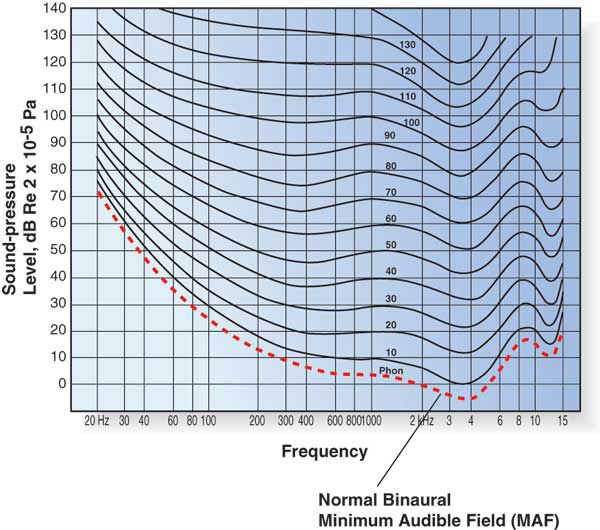
To the human ear, the perception of loudness at different frequencies is not always constant, even when the frequencies are at the same sound pressure level. This phenomenon is described by the equal loudness counter, and it can lead to music sounding different to our ears at different loudness levels. The goal here is to design a headphone amplifier that can compensate this effect, and present a more uniform perceived sound quality across different loudness levels.
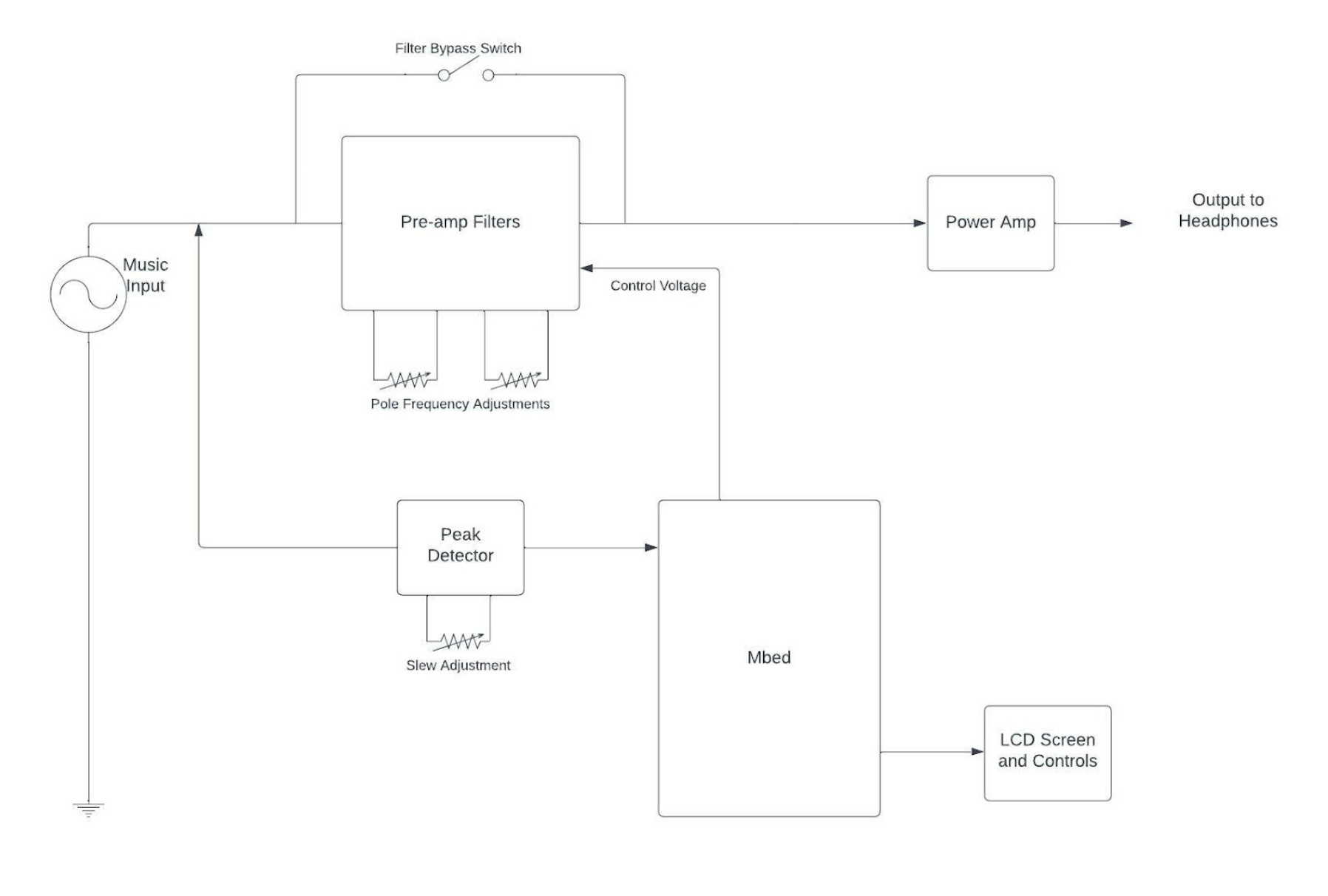
We were able to achieve the design goal by using a voltage controlled filter stages that uses JFETs as variable resistors. Input audio signal is analyzed with a level detection circuit and the level output is sent to the on board processor(mBed). Then the mBed uses one of its analog output pins to control the filter stage. The working principle is described by the block diagram below.
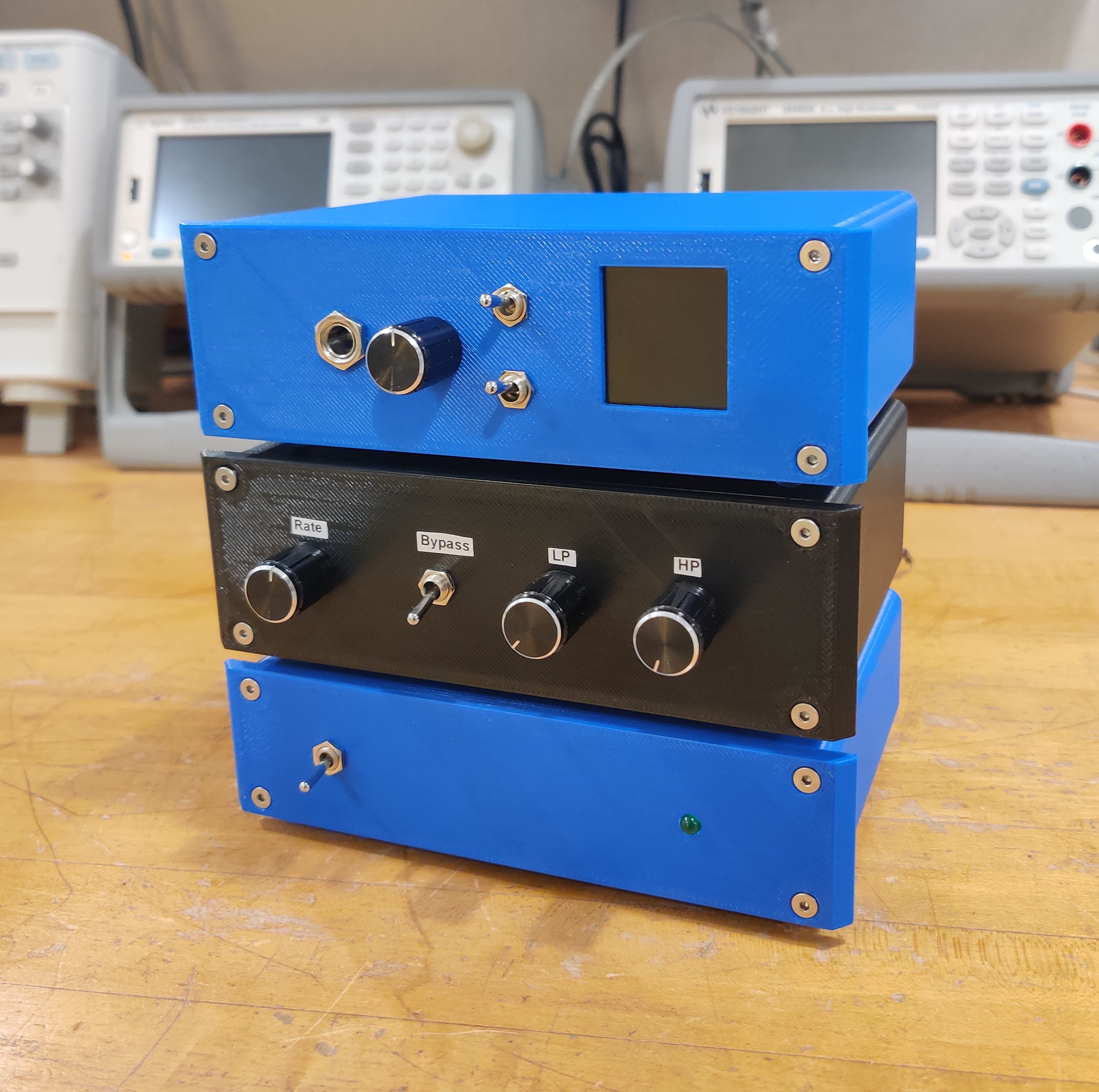
Here is a video demo of the features and controls of this headphone amplifier. The improvements to the audio quality is immediately noticeable, especially at lower volume levels. The design was praised by many who tried it during the senior design EXPO.

At the time of making this design, headphones or headphone amplifiers with loudness compensation were relatively uncommon. In recent times, however, more and more manufactures are putting this feature in their products, including the Apple AirPods Pro 2, although they implemented it by software rather than discrete circuits. It's good to see this exciting feature is becoming more common place.