Noise-Dependent Music Dynamic Range Control
This thesis project explores a psychoacoustic dynamic range control method for music playback in noisy environments. Instead of simply raising volume, the system estimates how environmental noise masks music, analyzes the music with a constant-Q Gabor transform, and applies a time-frequency gain map to selectively restore masked details.
Background
Everyday playback environments introduce nonstationary background noise, such as cafe noise, car cabin noise, and speech-like interference. These sounds can mask low-level musical details and make a simple volume boost feel unnatural. The goal of this project was to restore masked details while preserving the original dynamics and tonal balance of the music.
Gabor Analysis
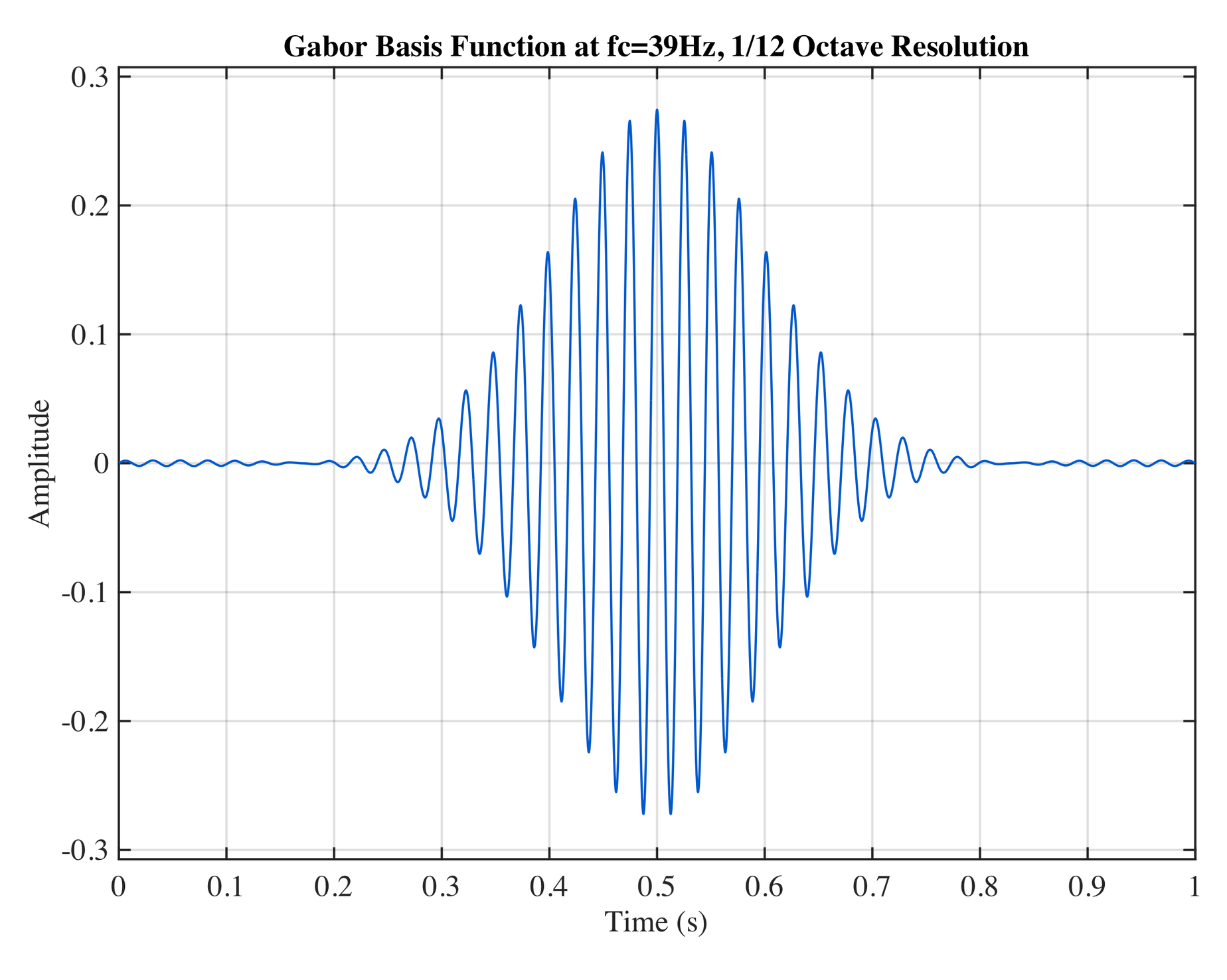
The music signal is represented as a set of Gabor atoms. Each atom captures energy around a specific time and frequency region, so the algorithm can adjust masked musical details without applying the same gain change to the entire signal.
Sparse Gabor Coefficients
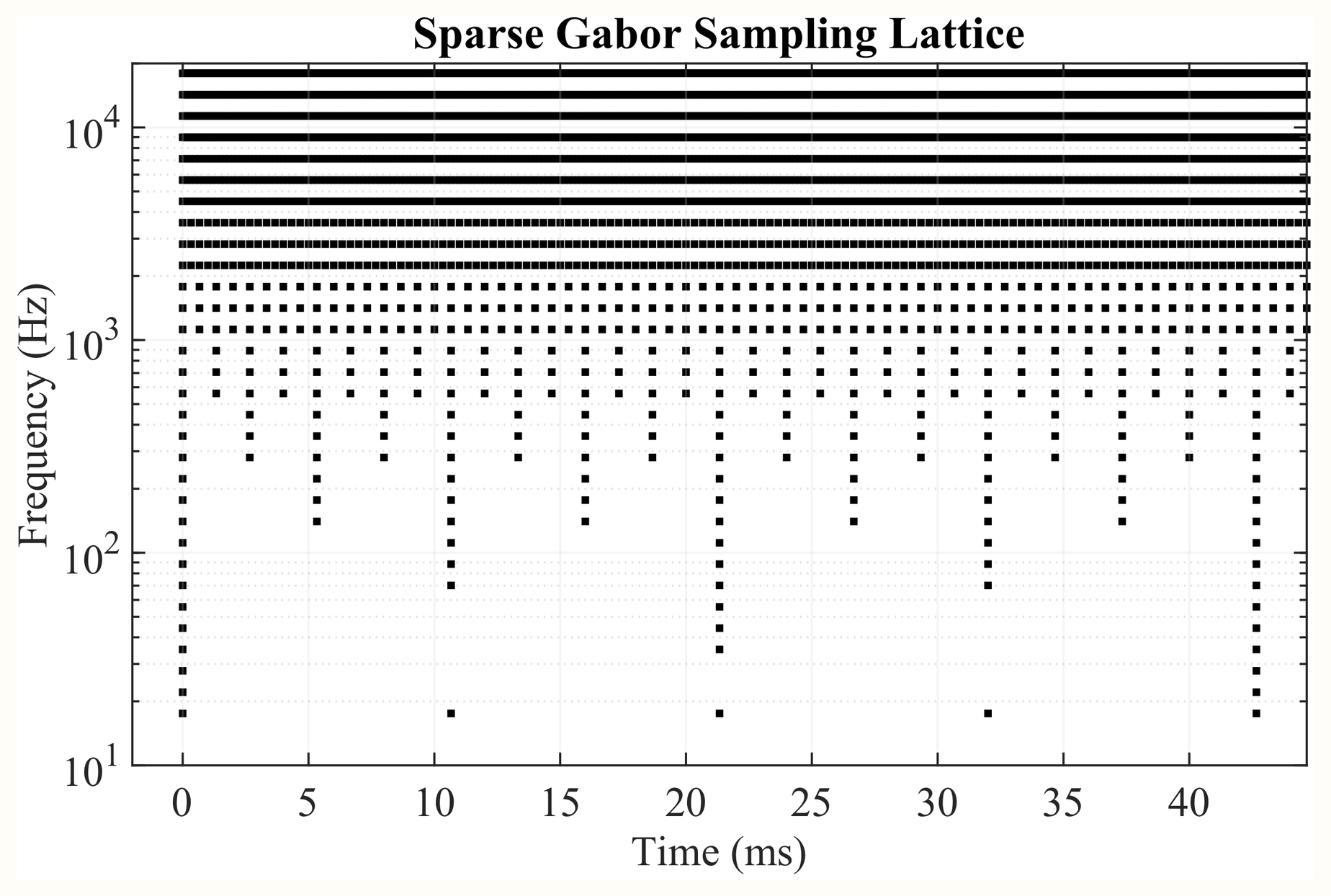
The algorithm uses a constant-Q Gabor representation, where each coefficient corresponds to a localized time-frequency atom. This sparse structure makes it possible to work directly on musical components that are likely to be masked, instead of applying broad static EQ or compression to the entire signal.
Masking Threshold
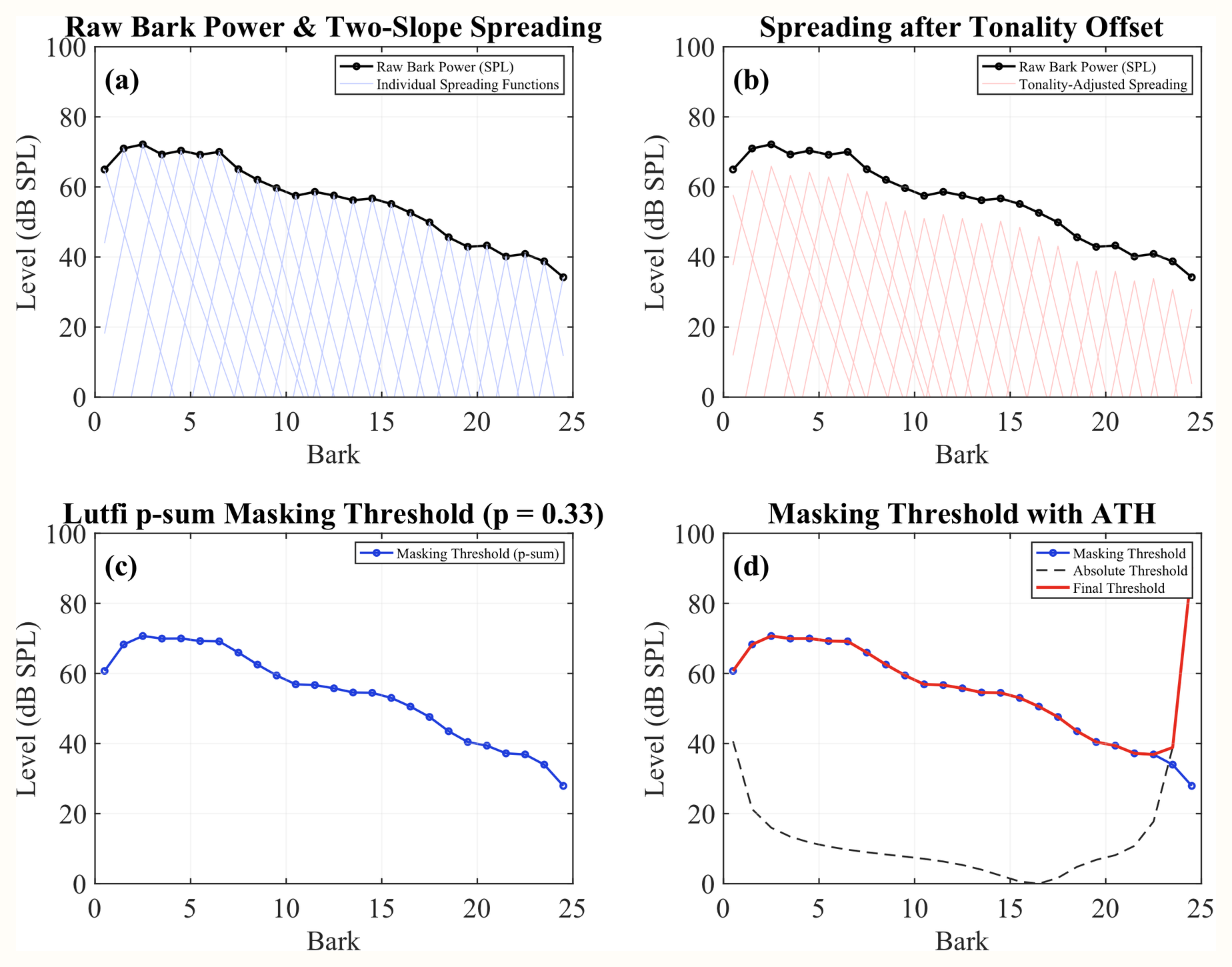
A masking threshold describes the level a sound must exceed to remain audible in the presence of another sound. In this project, environmental noise is analyzed in Bark bands, spread across neighboring critical bands, adjusted by tonality, and combined with the absolute threshold of hearing. The resulting curve becomes a perceptual boundary: music components below or near the threshold are candidates for selective enhancement.
Processing Pipeline
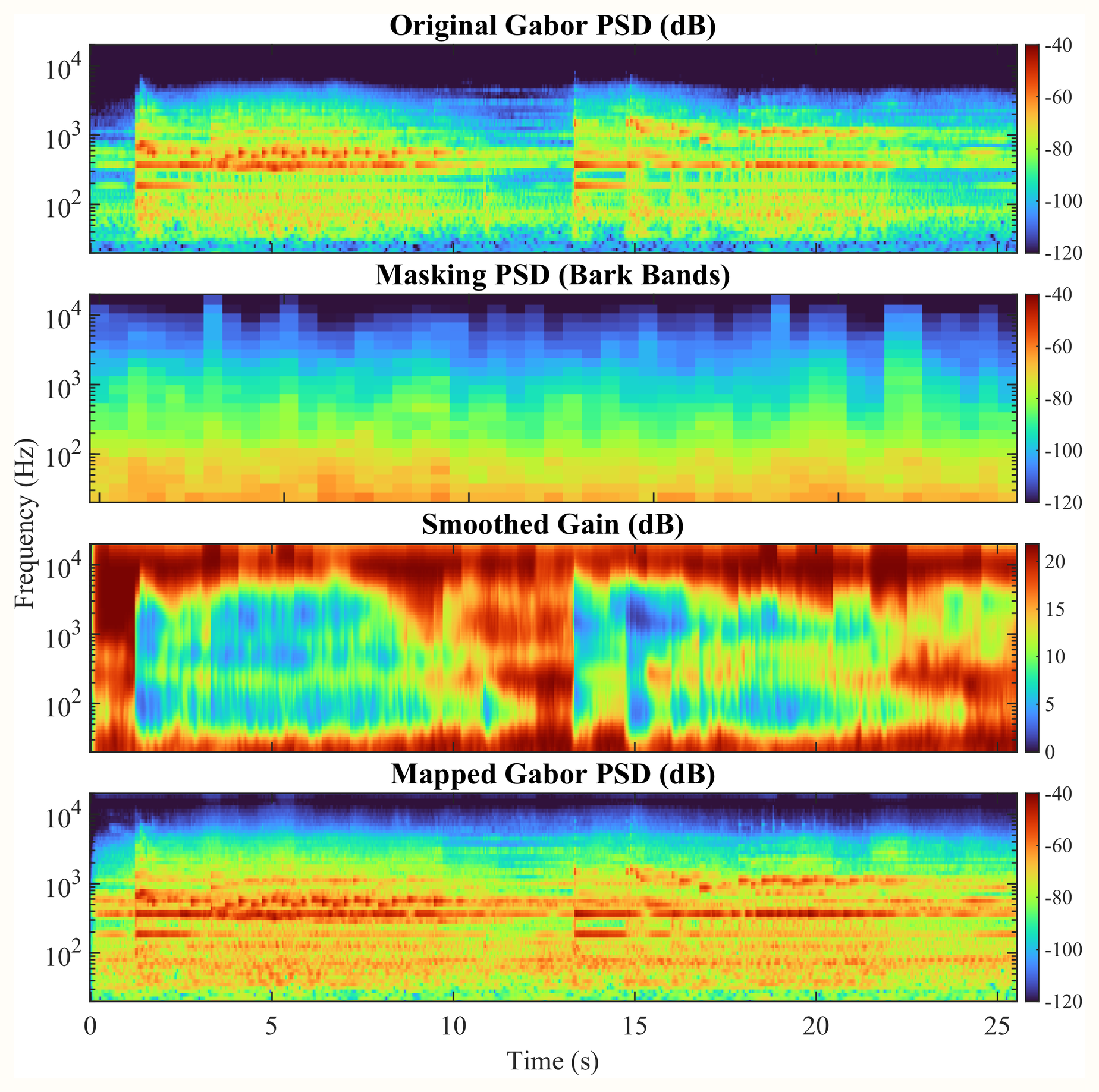
The processing pipeline was built in MATLAB with C++ MEX bindings to the Gaborator library. Environmental noise is converted into a Bark-domain masking threshold, while the music signal is processed in a higher-resolution Gabor domain so that gain can be applied only where it is perceptually useful.
Subjective Evaluation
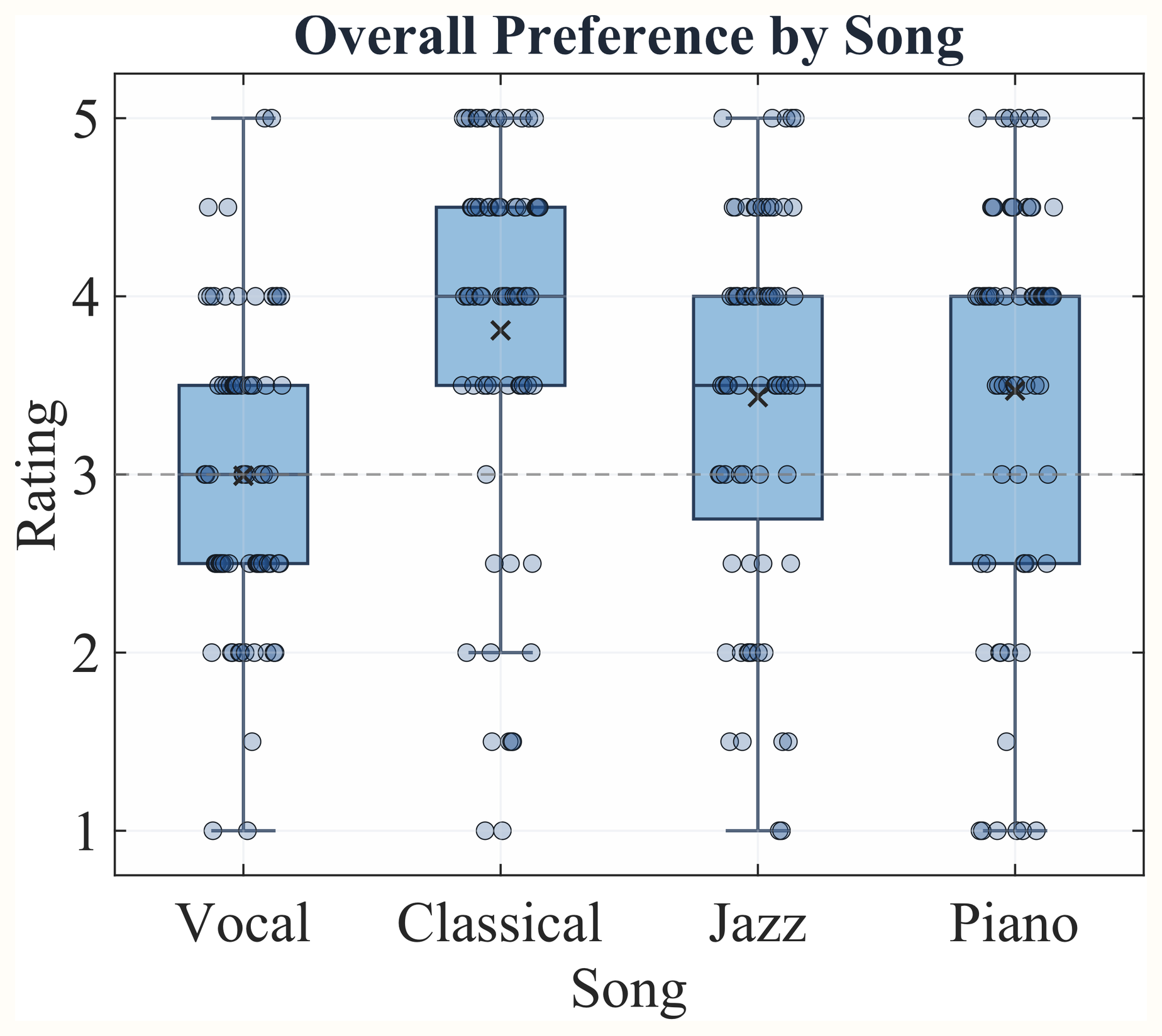
The method was evaluated with objective spectral distortion metrics and a double-blind listening test with 17 participants. The results were content-dependent: classical music benefited the most, jazz and piano showed moderate preference, and vocal material was closer to neutral. Overall, the processed signal was preferred more often than a simple volume-boost baseline in challenging noisy conditions.